
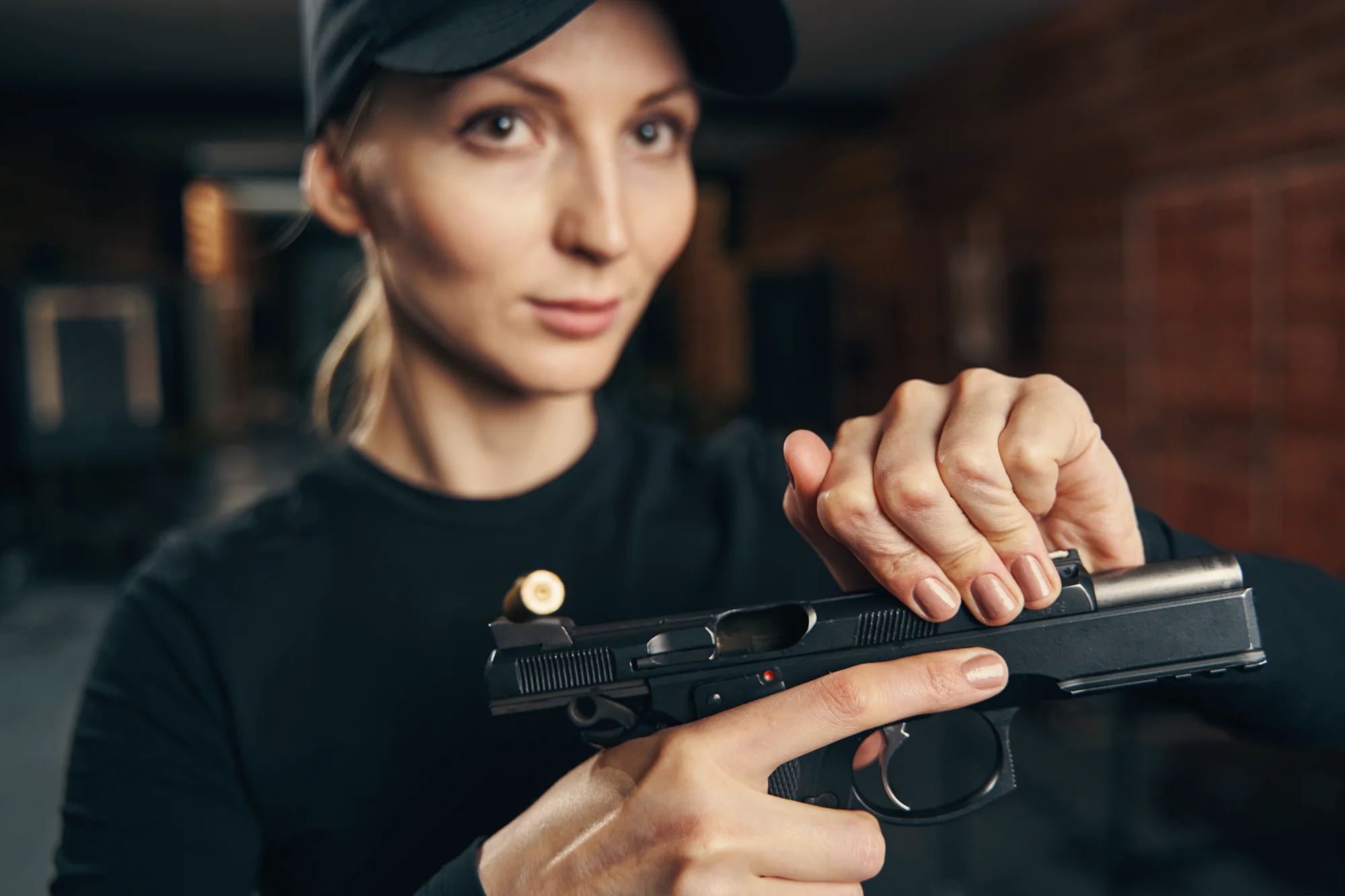
Here's something the firearms industry doesn't want you to think about too hard: almost everything they sell you, teach you, and tell you was designed by men, for men, based on how men's bodies work and how men learn.
Then they painted some of it pink and called it "for women."
This isn't an indictment of the industry. It's just the reality. And if you're a woman considering firearm ownership — or already own one and wonder why it doesn't feel quite right — understanding this gap is the first step toward actually getting what you need.
The Problems Nobody Talks About
Walk into most gun stores as a woman, and you'll encounter some combination of these experiences: being talked down to, being steered toward small "ladies' guns," being told what your husband or boyfriend thinks you should get, or being ignored entirely while the staff helps the man who walked in after you.
This isn't universal. Good instructors and shops exist. But the pattern is common enough that most women gun owners have stories.
The problems go deeper than bad customer service:
What They Tell You
"Women should carry small, lightweight guns because of their smaller hands."
The Reality
Small guns are harder to shoot accurately, have more recoil, and are more difficult to control. Hand size matters far less than proper grip technique and gun fit. Many women shoot full-size pistols better than compact ones.
What They Tell You
"Start with a .22 or small caliber — it's less intimidating."
The Reality
There's nothing wrong with training on a .22, but "less intimidating" often means "less effective for protection." Women deserve to train with the caliber they'll actually carry, using techniques that account for differences in grip strength.
What They Tell You
"Just get what feels comfortable in the store."
The Reality
How a gun feels in your hand for 30 seconds tells you almost nothing about how it will perform after 500 rounds, whether you can operate the controls under stress, or whether you can actually conceal it in women's clothing.
The Real Differences That Matter
Women aren't just smaller men. There are real physiological and practical differences that should inform firearm selection and training — but they're not the ones the industry focuses on.
Grip strength isn't just about size. Women typically have 40-60% of men's grip strength. This affects not just how you hold the gun, but how you rack the slide, manage recoil, and perform under stress. The solution isn't a weaker gun — it's technique adapted for these differences.
Concealment is a completely different challenge. Men's clothing has pockets. Men's bodies have straighter lines. Women trying to conceal carry have to work with curves, fitted clothing, and an industry that still thinks "concealment holster for women" means a smaller version of men's holsters. The answer isn't to dress like a man — it's to understand options designed for women's bodies and wardrobes.
Learning styles differ. Research shows women often benefit from understanding why before how — the reasoning behind techniques, not just the mechanics. Traditional firearms instruction, built on military models, tends toward "do it this way because I said so." This works for some people. It fails many women.
The gun doesn't need to change. The training does.
The Question Before the Gun
Here's what the industry almost never addresses: Should you carry a firearm at all?
Not "can you legally" — but should you, for your specific situation, your lifestyle, your risk profile, your household?
A firearm is Layer 6 of protection for a reason. It's the last resort, not the first line of defense. For some women, it's exactly the right choice. For others, the risks outweigh the benefits. For many, the answer changes over time as circumstances change.
A firearm you can't access quickly is useless. A firearm you haven't trained with is dangerous. A firearm in a home with domestic violence is statistically more likely to be used against the victim than by her. These aren't arguments against gun ownership — they're arguments for informed, thoughtful decision-making that the industry rarely encourages.
What Good Training Actually Looks Like
If you choose this path, you deserve training that was designed for you — not adapted from what's taught to police officers or military personnel. Here's what to look for:
Instructors who teach technique, not just mechanics. "Grip the gun tighter" isn't instruction. Understanding how to maximize your grip strength with proper hand placement is instruction.
Training that addresses real scenarios. Most women who need to use a firearm defensively will face a threat from someone they know, in their own home, often at close range. Training that only covers range shooting misses the reality.
Honest discussion of when NOT to draw. The presence of a firearm changes every interaction. Good training covers the legal, practical, and psychological implications — not just how to shoot.
Attention to the complete picture. Firearm training without awareness training, without verbal de-escalation skills, without understanding the legal aftermath — is incomplete at best, dangerous at worst.
The Choice Is Yours
We believe every woman has the right to choose whether firearm ownership is right for her. We also believe that choice should be informed — not by marketing, not by politics, not by fear, but by honest information about what firearms can and can't do.
If you choose this path: get training. Real training, from instructors who understand women's needs. Practice regularly. Understand the legal implications in your state. Secure your firearm properly. And never stop building the other layers of protection that make the firearm truly a last resort.
If you choose not to: that's equally valid. A firearm isn't the only way to be safe. It's not even the most important way. The five layers that come before it are available to everyone, require no permits, and are effective in situations where a firearm would escalate rather than resolve.
What matters is that it's your choice, based on your circumstances, informed by real information — not industry marketing or cultural pressure from either direction.
Training Designed for Women
If and when you're ready for firearms training, Fierana's Layer 6 curriculum was built from the ground up for women — covering selection, technique, legal considerations, and the complete protection system that makes firearms the capstone, not the foundation.
Join the Founding Circle